


- 5. Congregational Chapel and British School
5. Congregational Chapel and British School
An enduring influence
The original Congregational Chapel that stood on this spot was gothic-revival in architecture, with a steeple and sandstone cladding. D.H. Lawrence's father, Arthur, was not much of a church-goer; it was his mother Lydia, for whom religion had always been more important. Her upbringing had been Wesleyan; her father had been a Wesleyan lay-preacher. Yet in Eastwood, Lydia gravitated towards Congregationalism, and this is the chapel which she attended with her children. The chapel was demolished in 1971.
The denominations of church in Eastwood seem to have been separated by class: The Wesleyans and Methodists were distinctly working-class, the established Church of England was more closely linked with the land-owning gentry, while the Congregationalists were somewhat in the middle. The Congregational membership was largely working-class but with a strong intellectual tradition and associated with reforming liberalism. Congregationalists then, were socially vital and spiritually superior. Many Lawrence biographers have stressed the importance of Lawrence's religious upbringing on his character and writing.
Attendance at the chapel was a key feature of Lawrence's early social life. As well as offering services, there were lectures, talks, magic lantern shows and penny readings for the children. As he grew older Lawrence broke with chapel Christianity, yet the language and imagery of the bible and much of the approach of his religious teaching, around individual insight, remained with him always.
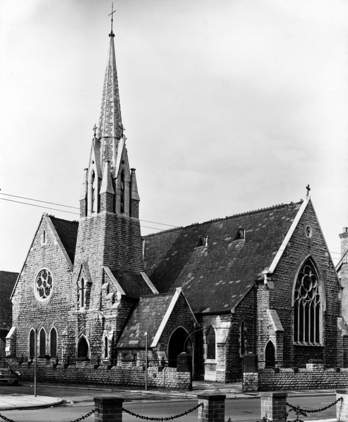
Congregational Chapel, Eastwood, 1960. Image courtesy of Inspire.
Meeting Jessie Chambers
Kate Foster, Secretary of the Haggs Farm Preservation Society discussed Lawrence's first meeting with Jessie Chambers, at the Congregational Chapel.
British School
There were thousands of British Schools established throughout Victorian Britain. Up until the Education Act of 1870 they were often the first school a community might have and the only opportunity for children from poorer families to gain an education.
They employed a monitorial system, in which older, more-able children would teach the younger children. This supplement of pupil-teachers reduced the number of trained teachers needed, making the education affordable. There was though, a large element of crowd control. Classes were large and one teacher could be responsible for 300 or more boys. The British School which stood here is where D.H. Lawrence had his first foray into teaching.
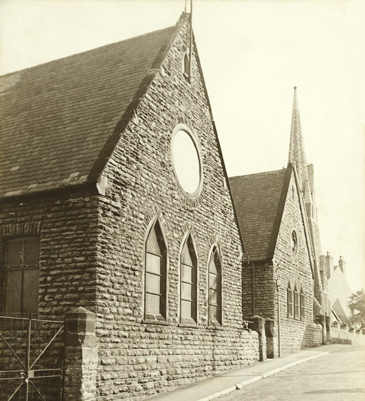
British School 1958. Image courtesy of George L. Roberts, Picture Nottingham.